



Big storylines may drive the action, but it’s the quiet, everyday moments that make a relationship feel real, and offer a more powerful kind of representation on screen.
For a couple on the brink of such a major milestone, Carla and Lisa’s journey has been anything but quiet. Their relationship has unfolded against a backdrop of intense, often high-stakes storytelling, exactly the kind of drama that keeps audiences engaged and coming back for more. And to be clear, that drama has worked. It’s created tension, talking points, and a powerful connection between the characters that viewers have really invested in.
After all, this is a relationship that has already weathered sepsis, a kidney transplant, two hostage situations, the shock (or not so much) return of a presumed-dead ex-wife, a split, and a speedy reconciliation – not exactly your standard romantic journey. And now, just as they edge closer to their wedding, they’ve found themselves unexpectedly caring for a baby. It’s a relentless sequence of events, and in many ways, it’s what has made their story so compelling.
But the introduction of the baby storyline also raises some interesting questions about intent and direction. Was baby Connie brought in primarily as a plot point to finally allow Carla to open up about her miscarriage? Could it be laying groundwork for something further afield, perhaps even foreshadowing a potential teen pregnancy storyline for Betsy? Or is it, more simply, filler designed to give the characters shared screen time and momentum in the lead-up to the wedding?
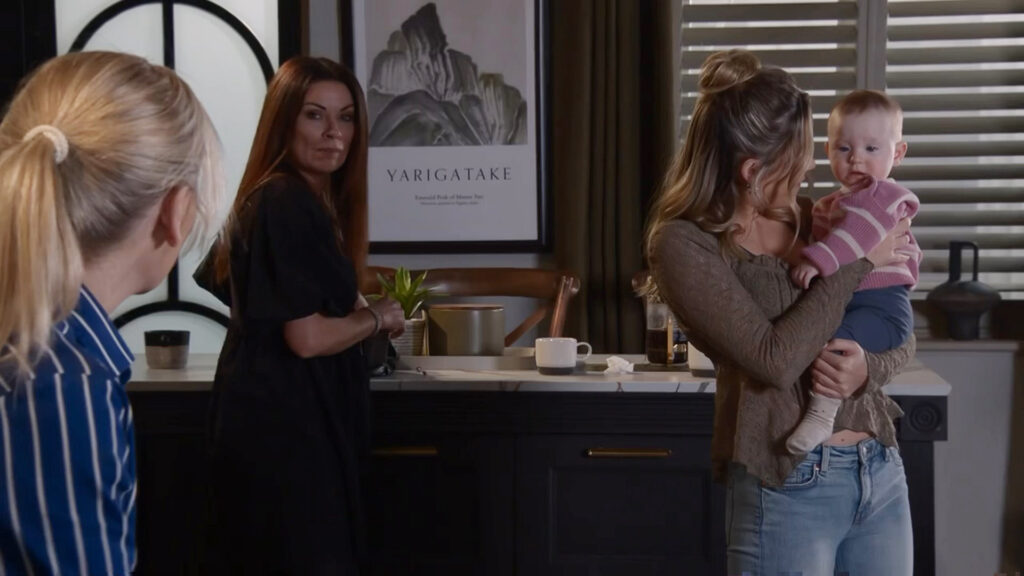
But alongside that, there’s a growing appetite among the audience for something a little different. Not instead of the drama, but alongside it. Because while we all know that big, explosive storylines drive momentum (and the all important views), it’s often the quieter, more ordinary moments that make a relationship feel truly representative.
That’s where the idea of domestic intimacy comes in, and why so many fans are starting to call for more of it.
At its core, domestic intimacy is about the everyday. It’s the scenes where nothing particularly dramatic is happening, but everything important is still being said. A conversation over a cup of tea. A shared look across a room. A slightly petty disagreement that turns into laughter five minutes later. These are the moments that build a sense of reality, the kind that allows viewers to recognise something of their own lives on the screen.
For Carla and Lisa, those moments have understandably taken a back seat at times. The scale of the storylines they’ve been involved in, particularly those tied to Lisa’s grief and presumed-dead wife, has meant their relationship often exists in heightened emotional territory. That intensity has given their connection weight, of course, but it also means we’ve seen more of them coping together than simply being together.
Even the current baby storyline, which does bring an element of domesticity into their lives, still arrived wrapped in pressure and responsibility. It’s not quite the same as choosing that life together, it’s something that’s been placed upon them, adding another layer of urgency rather than slowing things down. There are glimpses of what they could be like in a more settled environment, and those glimpses are exactly what make audiences want more.

Because imagine pairing that with something as simple, and significant, as wedding planning. The lengthy conversations about what they both want, the compromises, the moments of excitement, nerves, even disagreement over the smallest details (at the time of writing, we’ve seen one scene about inviting half of Wetherfield). It’s in those kinds of scenes that a relationship starts to feel fully formed. And for a couple like Carla and Lisa, who have already proven they can survive the extraordinary, it would be refreshing to see them navigate the ordinary.
Drama absolutely has its place. It drives the plot and gives actors the material to deliver those standout performances that get people talking. In soap, especially, it’s part of the DNA. Big moments bring big audiences, and there’s no denying that Carla and Lisa’s biggest storylines (which of course lead to more screen time) have have played a huge role in their popularity.
But when it comes to representation, particularly for LGBT relationships, there’s something uniquely powerful about the ordinary.
For a long time, queer relationships on screen have often been framed through struggle: secrecy, conflict, tragedy, or external pressure. While those stories are important and reflect real experiences, they’re only one part of a much broader picture. Seeing a lesbian couple exist in a space that isn’t defined by constantly dealing with a crisis or an issue, where they can be soft, domestic, even a bit mundane, offers a different kind of impact.
It normalises. It reassures. It tells audiences that these relationships don’t have to be exceptional to be meaningful. They can simply exist.
That’s why scenes of everyday life carry so much weight. Watching Carla and Lisa navigate something as simple as sharing a home, building routines, or figuring out how they fit together day-to-day would add a new dimension to their story. It would show not just that they love each other, but how that love functions when the world isn’t falling apart around them. And far from reducing engagement, those moments can actually deepen it.

When viewers see the small, human details of a relationship, such as habits, humour, and comfort, it strengthens emotional investment. The stakes of any future drama become more personal, because the audience understands exactly what could be lost. It’s no longer just about whether the relationship survives in a narrative sense, but whether this specific, recognisable version of it continues.
Placing quieter, domestic scenes alongside bigger, more dramatic arcs allows both to stand out more clearly. A tense storyline hits harder when it interrupts something stable. A moment of calm feels more meaningful when it follows chaos. It creates a rhythm that keeps the story dynamic without becoming overwhelming.
For Carla and Lisa, this kind of balance could open up new layers in both characters.
Ultimately, the desire for more domestic intimacy isn’t a criticism of what’s come before. It’s a reflection of how invested the audience has become. People don’t just want to see the big milestones, they want to see the life that leads up to them.
Because in many ways, that’s the most meaningful representation of all: not just a love story that survives the drama, but one that exists where there is none.