



For a few weeks now, Coronation Street has been teasing the beginning of one of its most important and challenging storylines in years – a storyline that isn’t focused on a villain or a dramatic twist, but something much more uncomfortable. Reality.
This week, it all kicked off with Betsy Swain being rushed to hospital after engaging in consensual non-fatal strangulation during sex with her boyfriend Dylan, and later suffering two strokes.
Since the episode aired on Wednesday, it has understandably generated huge discussion online. But alongside thoughtful conversations about consent and risk, there have also been claims across social media that the storyline is “too dark”, “ridiculous”, or simply something Coronation Street viewers do not want or need to see.
One argument that has repeatedly appeared, on our timeline anyway, is that young people do not watch soaps, and therefore this is not the right platform for a storyline like this.
But that argument misses the wider point. Whether someone watches Coronation Street every night or only occasionally, the conversation this storyline is starting exists far beyond the screen.
Betsy’s story demonstrates that something viewed by many as a normal, can still have devastating repercussions.
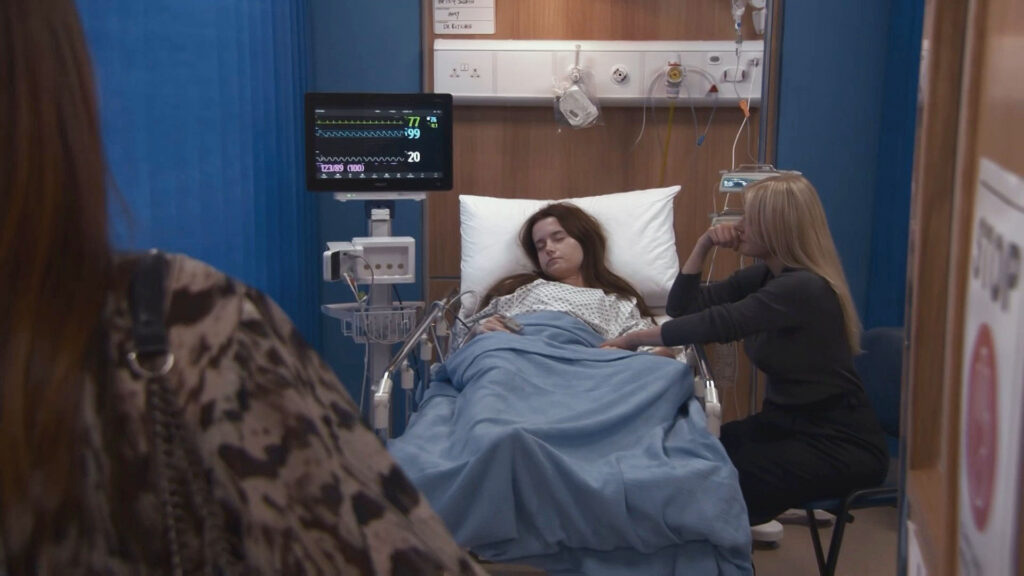
Something considered ‘normal’ changed Betsy’s life forever
For many people, non-fatal strangulation has become normalised as part of sexual relationships. It is something increasingly discussed online and seen in pornography, often without an understanding of the potential consequences. Betsy’s story shows the reality behind something that many people may dismiss as harmless.
A consensual act resulted in a medical emergency that left a young woman suffering two strokes.
That is not about judging people’s choices, or ‘kink shaming’ as our social media audience like to put it. It’s about understanding that consent does not remove risk, and it does not make something physically safe.
As Sydney Martin, who plays Betsy, explained in an interview with Duncan Lindsay from Metro, she was aware that the storyline would divide opinion, but believes that reaction is exactly why these conversations need to happen.
“I think that’s exactly what we wanted. You just have to take one look at the reaction to understand why these topics stay taboo.”
The discomfort some people may feel is not a reason not to tell it, the discomfort is the reason it needs to be told.
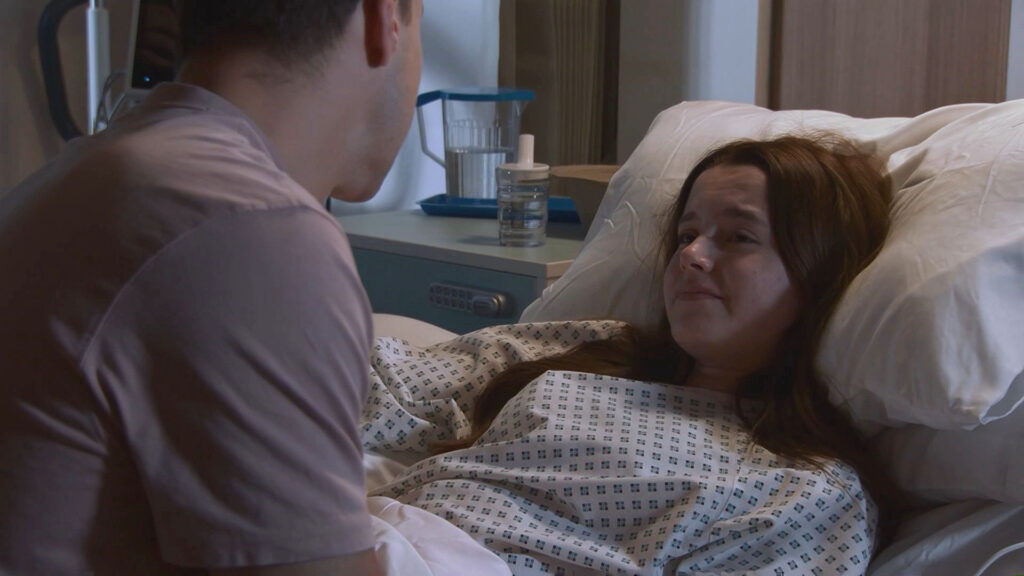
Millions of people are watching
There are very few regular programmes left on British television with the reach that Coronation Street still has.
Five nights a week, it enters millions of homes, and more when you include those that log on to YouTube or ITVX when each episode drops at 7am (you know who you are). It reaches different generations sitting together, younger viewers watching independently having found viral clips on social media, and families who have made the show part of their routine for decades.
That reach comes with responsibility to tell difficult stories, especially ones that can help save lives.
Non-fatal strangulation has become an increasingly popular topic among young adults, yet awareness of the medical risks remains dangerously low. Many people still believe that if someone survives an incident without obvious injury, then they are fine, but that simply is not true.
In 2019, a BBC 5 Live poll reported that 38% of respondents aged 18-39 said they had experienced being “choked” during consensual sexual activity.
More recent findings from the Strangulation During Sex in the UK survey by the Institute for Addressing Strangulation (2025) indicate that the practice may be even more common, especially among younger age groups. The survey found that more than half (55%) of people aged 16-34 had either experienced strangulation during sex or had engaged in it with a partner.
According to Gloucestershire Hospitals NHS Foundation Trust, there is no safe way to strangle someone. Pressure to the neck can restrict blood flow and oxygen supply to the brain, potentially causing strokes, brain injury or death. The absence of visible injuries does not mean the absence of serious harm.
Their guidance highlights that approximately 50% of victims have no visible external injuries, meaning serious harm can occur even when someone appears physically unaffected.
Sydney herself highlighted just how shocking the lack of awareness around this subject can be, explaining that when she began researching the storyline, she discovered how little pressure it can take for serious injury to occur.
She told Metro:
“When I first got told about it, I learnt that it takes more pressure to open a can of Coke than it does to cause brain damage.”
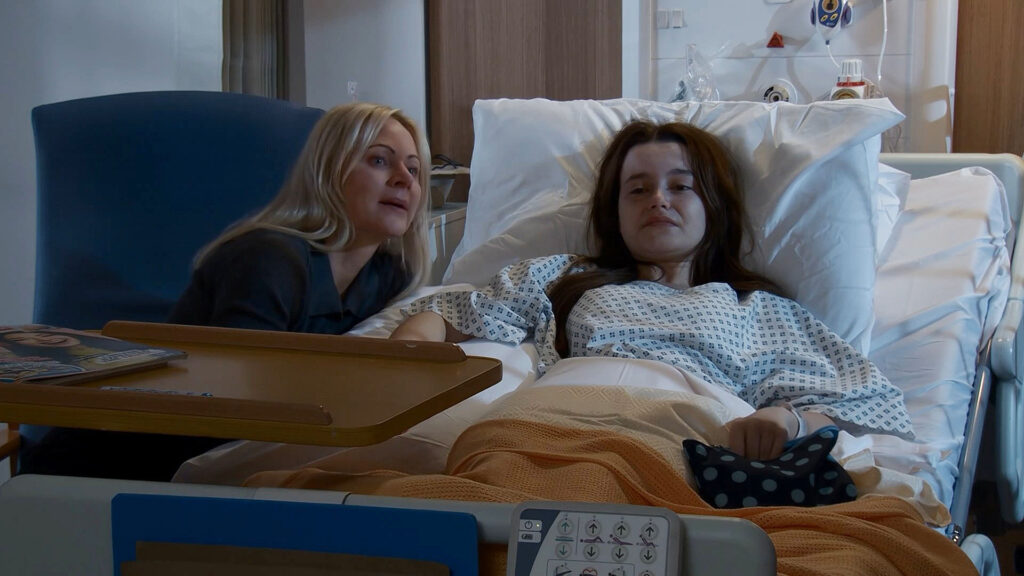
The audience is exactly who needs to hear this story
After seeing repeated conversations online claiming that this storyline was unnecessary because “young people don’t watch Coronation Street“, I decided to look at the audience rather than rely on assumptions.
Through SwarlaHQ’s channels, I ran polls asking followers which age bracket they fell into.
Across 1,558 responses, the results showed:
Under 18: 90 votes
18 – 34: 817 votes
35 – 54: 531 votes
55 +: 120 votes
These results clearly show that the audience engaging with this storyline includes a significant number of people within the age groups most relevant to this conversation. In our polls, respondents aged 18-34 represented the largest proportion of votes. This is particularly significant given that the Institute for Addressing Strangulation found that over 55% of people within this age group had either experienced or engaged in strangulation during sex.
The idea that young people are not watching soaps, or that this story is being told to the wrong demographic, simply does not reflect the audience.
And the Connor-Swain family may just be one of the most appropriate places for this storyline to sit.
Why the Swarla fandom is the right audience, and Sydney the right actor for the story
The Swarla fandom has grown into a community that really engages with the stories told by their favourite characters.
The appeal of Lisa Swain and Carla Connor’s relationship has never been solely about romance. The dynamic surrounding them as they blended their families has allowed Coronation Street to explore difficult subjects, such as Lisa’s therapy journey, through characters viewers already trust and care about.
When challenging topics are placed within families audiences are emotionally invested in, people are more likely to listen and discuss. And the Connor-Swain family provides exactly that.
Betsy feels like the right character to tell this story through, not only because she’s part of that family, but because she represents a generation navigating relationships and social pressures in a world of near-unlimited access to online content. She hasn’t been written as reckless or irresponsible, far from it. She’s an ordinary 18-year-old making what she believes is a normal decision with someone she trusts.
It’s also a testament to the acting abilities of Sydney Martin. Just two years into her Coronation Street journey, she’s been trusted with a soap-first storyline carrying a significant public health message. I’m sure anyone who has watched this week’s episodes will agree that her performance has been outstanding, and we can’t wait to see what she delivers as we see Betsy’s journey of recovery.
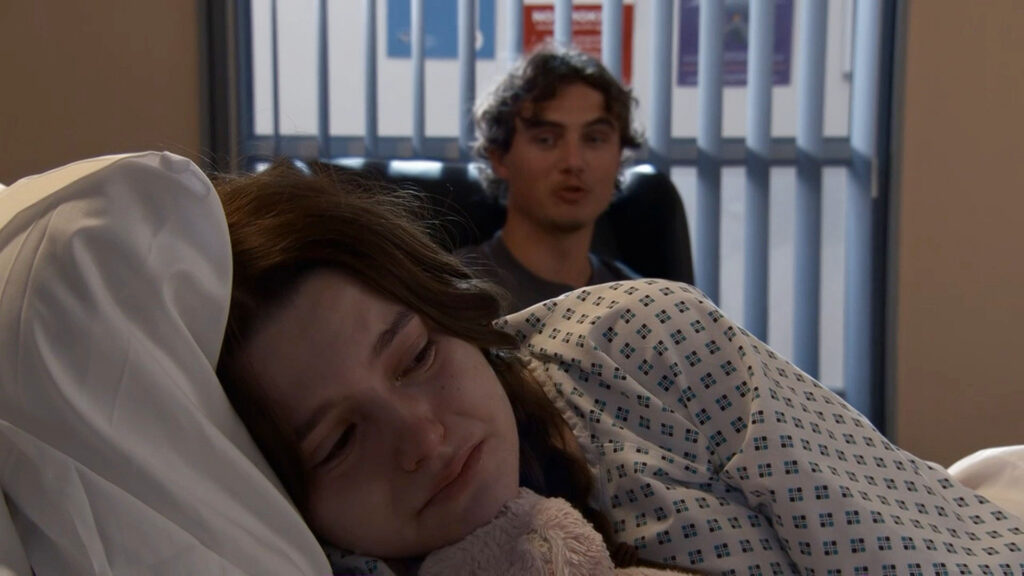
Betsy’s story shows why ‘consensual’ doesn’t mean ‘without consequences’
One of the biggest misconceptions surrounding this storyline has been the idea that because Betsy consented, Dylan cannot have done anything wrong. But consent is not as simple as that, consent means agreeing to something. It does not guarantee something is safe, nor does it remove the possibility of harm, or automatically remove responsibility when serious injury occurs.
The fact that Betsy agreed to the act does not erase the medical reality of what happened afterwards. It does not undo the two strokes, and it does not mean there will be no legal consequences.
Where significant physical harm has occurred, the law does not simply view consent as a complete defence. As Sydney explained to Metro, this was something the production team were keen to explore carefully:
“It’s not a bad guy/good guy situation. It’s two consenting young adults. There isn’t a villain in this.”
Dylan is not being presented as a villain, and Betsy is not being presented as a victim. Instead, viewers are being asked to understand that something can be consensual and still have devastating consequences.
Sydney also acknowledged the complexity of that situation, explaining to Metro:
“Even with consent, if someone has been physically injured from it, he is still liable by law and could be charged.”

This is exactly what soaps are for
Soap operas have always been at their best when they tackle conversations people might otherwise avoid. From domestic abuse to coercive control, cancer diagnoses to mental health struggles, soaps have repeatedly used their platforms to educate as well as entertain. Sometimes those storylines make viewers uncomfortable, they divide opinion. But the reason they are written, filmed, and broadcast, is to start conversation and bring awareness to issues.
If someone watching Betsy’s story learns that non-fatal strangulation is never truly “safe”, if someone understands the risks involved, if a parent recognises warning signs, or if someone seeks medical help because they are worried about delayed symptoms… well, that just makes it all worth it, doesn’t it?
By telling this story, Coronation Street has the chance to help make sure it does not change someone else’s life in the same way.
All images copyright ITV